Intent
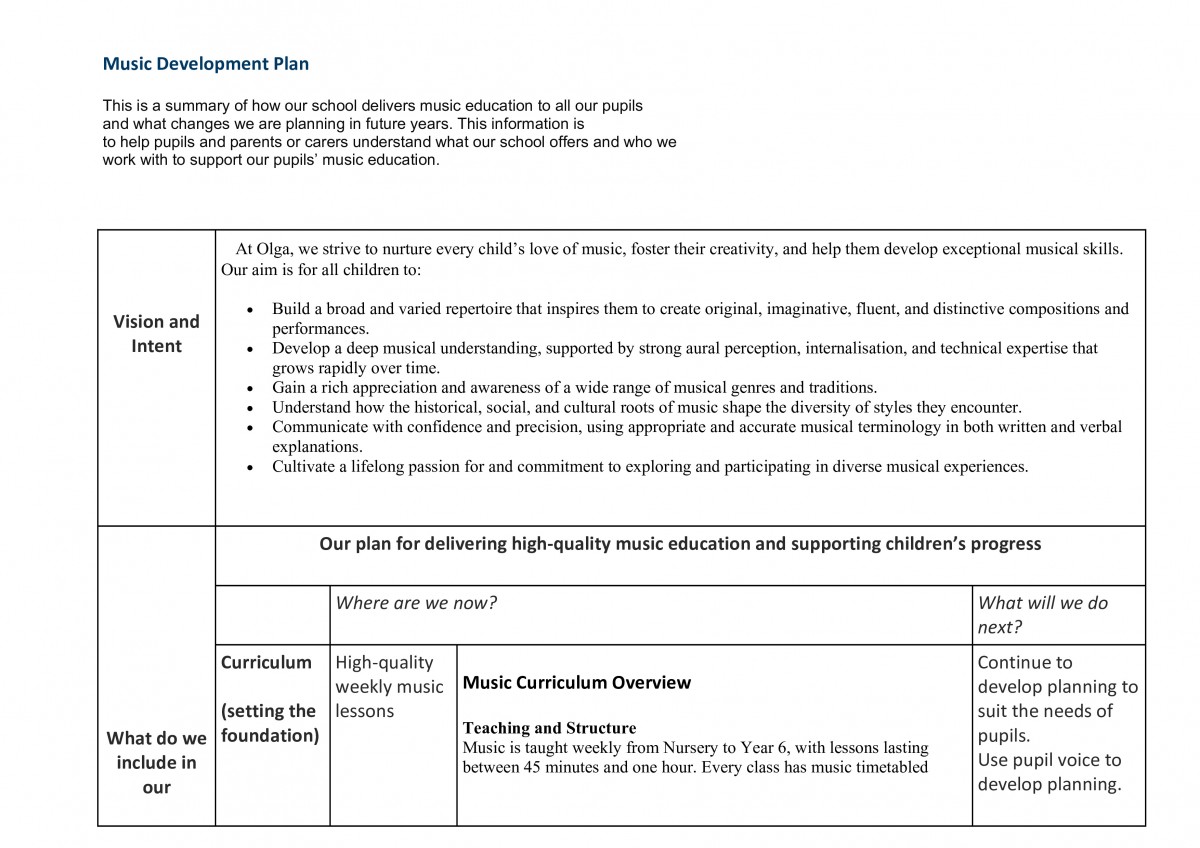
At Olga Primary School, children develop a love and understanding of music through listening, singing, performing, composing, recording, and evaluating music from a wide range of historical periods, styles, traditions, and genres.
Our aim is to nurture confident, creative musicians who are inspired to express themselves through music. We celebrate the diverse cultural heritages of our pupils by providing a broad variety of musical experiences throughout their time at Olga, including frequent performance opportunities.
We are committed to helping children recognise the value and importance of music within the wider community. Through developing their musical knowledge, skills, and experiences, pupils learn to engage with music in meaningful ways, both in school and beyond.
Implementation
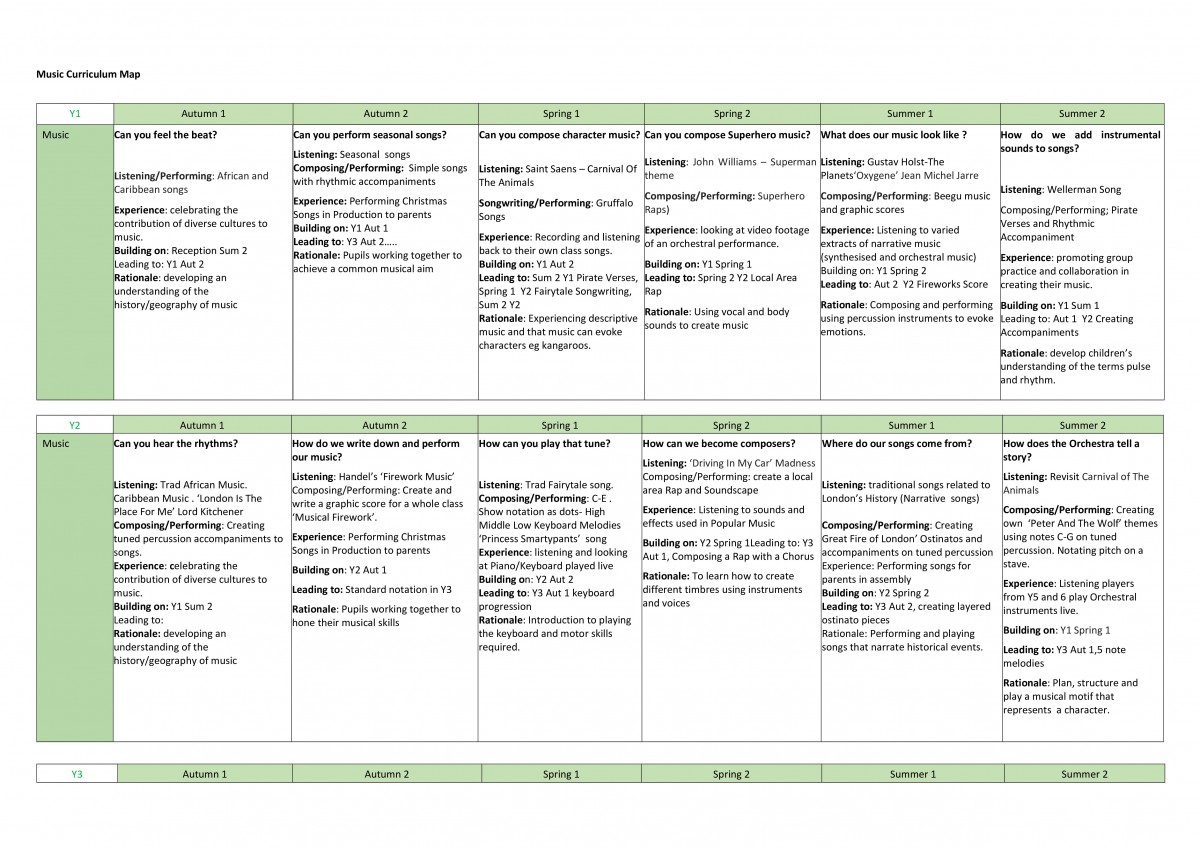
At Olga Primary School, we follow the National Curriculum for Music, enriched by a bespoke programme designed to reflect the backgrounds, interests, and abilities of our pupils. The key areas of study are Listening, Performing, Composing, Recording, and Evaluating, all of which incorporate the core musical elements.
While all children work confidently within Key Stage 1 and Key Stage 2 objectives, by Year 6 many are already progressing into Key Stage 3 areas of study. Our curriculum often takes a cross-curricular approach, complementing and extending learning in other subjects.
We adopt a global approach to music, drawing from a rich variety of musical cultures, including the children’s own family heritages, as well as contemporary works, historical periods, and world music. Music is also linked to key religious and cultural events throughout the year, such as Christmas, Eid, and Chinese New Year. This allows children to explore unfamiliar traditions while sharing their own musical backgrounds with peers.
From Nursery to Year 6, all children receive between 40 minutes and one hour of music each week. Reception to Year 6 use our dedicated music room, equipped with a wide range of percussive, acoustic, and electronic instruments. Each half term focuses on a different musical area, ensuring progressive development of skills and knowledge year by year.
Every Key Stage enjoys a weekly 25-minute singing assembly, where pupils learn, share, and perform songs from diverse genres and cultures. These sessions also support preparation for school performances, celebrations, and special events.
Throughout the year, selected year groups take part in special music projects and performances, such as the Border Crossings Opera Project and Seeds of Hope, a UNESCO-backed film project. We strive to ensure that every child experiences live performance opportunities during their time at Olga.
Instrumental Tuition:
- Year 3: Whole-class recorder lessons
- Year 4: Whole-class violin tuition
- From Year 5 onwards: Optional free small-group lessons in violin, flute, or bassoon with Thames Tutors
Pupils are encouraged to work towards ABRSM (Associated Board of the Royal Schools of Music) exams and to participate in THAMES (Tower Hamlets Arts and Music Service) music days and the annual THAMES Celebration Concert.
Extra-Curricular Opportunities:
We offer a range of free after-school music activities, including:
- Olga Orchestra (from Year 3 upwards)
- Two Olga Choirs, which perform regularly in school and at external events such as carol singing at The Royal London Hospital and the O2 Young Voices Concert.
In addition to our whole-school Christmas Concerts, we host Spring and Summer Music Concerts, providing a wonderful opportunity for families to celebrate the children’s achievements and musical progress.
Impact
Our Music Curriculum is designed to ensure clear progression of musical knowledge, skills, and confidence across all year groups. It enables pupils to explore and develop their own musical interests and strengths, fostering creativity, collaboration, and self-expression.
We measure impact through:
- Ongoing discussions with children about their learning
- Questioning and feedback within lessons
- Regular teacher assessment of key musical skills, such as pitch and rhythm
- Opportunities for self-evaluation and reflection on next steps
- Pupil voice: encouraging children to share their musical preferences and incorporate their own repertoire into lessons
- Displays celebrating children’s work and achievements
- Frequent performance opportunities to demonstrate progress and confidence
Pupil Voice
‘I enjoy playing Garage Band because I can make my own songs’ (mentioned lots of times)
‘Music is fun, joyful, happy and exciting’.
‘Music makes me feel happy and calm because when you play a piece of music you can just get lost in it’.
‘Music is fun because I can express my feelings when I am playing an instrument’.
‘Music is fun because we get to learn about new instruments and musicians.'
‘Music is my life because it was able to get me through my tough times.’
'Music makes me like a different person and makes me enjoy all things that inspired me.'
A number of Olga children have received the music scholarship for St Paul’s Way Secondary