“The study of geography is about more than just memorising places on a map. It’s about understanding the complexity of our world, appreciating the diversity of cultures that exist across continents. And in the end, it’s about using all that knowledge to help bridge divides and bring people together.”
- Barack Obama
Intent
At Olga Primary School, our Geography curriculum is designed to inspire pupils to be curious about the world and its people, fostering a lifelong fascination with diverse cultures, environments, and global connections. We encourage children to develop as kind and respectful global citizens, recognising their place in the world at local, national, and global scales. Our curriculum empowers them to be courageous thinkers who understand how people and the environment interact and how their actions can shape a sustainable future.
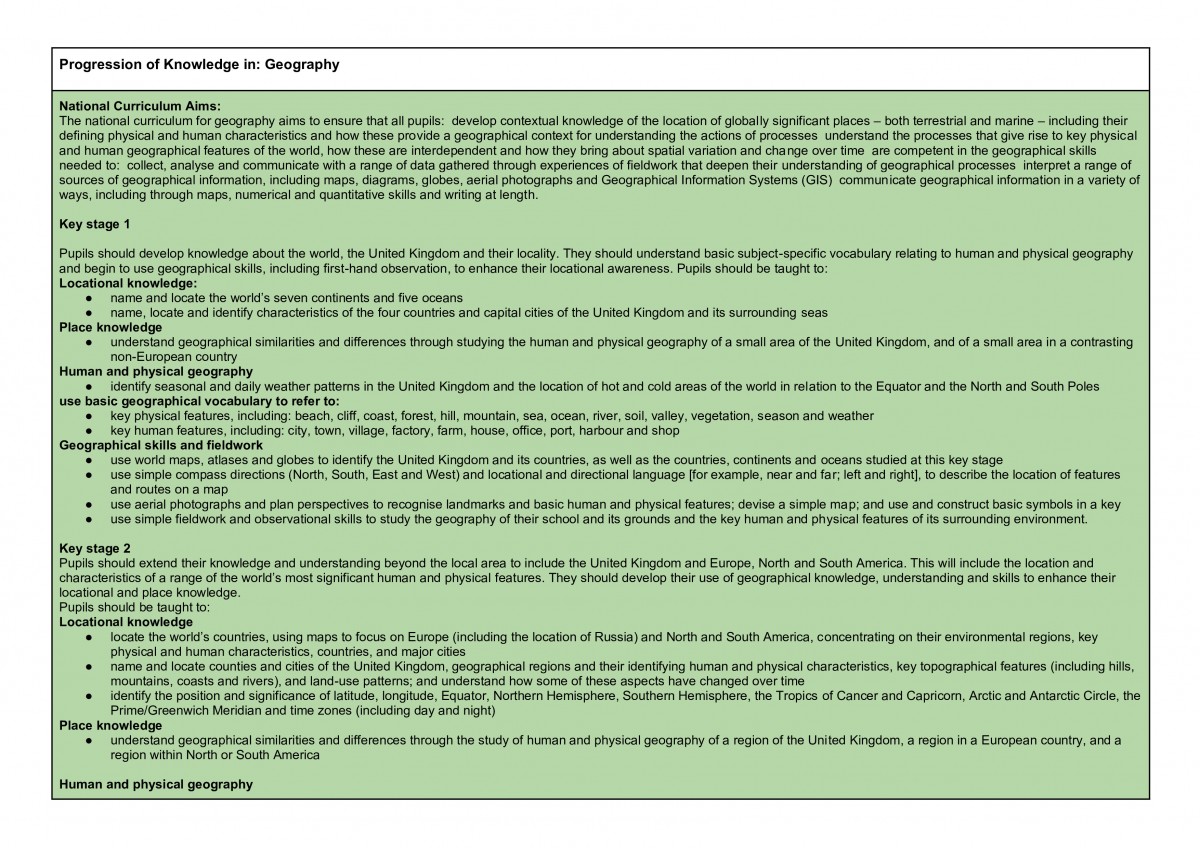
Our Geography curriculum covers all strands of the National Curriculum:
- Locational knowledge: developing secure knowledge of continents, countries, regions, and major cities worldwide.
- Place knowledge: comparing and appreciating similarities and differences between places, including Mile End, the UK, Europe, and beyond.
- Human and physical geography: exploring natural and human features such as climates, rivers, resources, settlements, and land use, and how these influence lives.
- Geographical skills and fieldwork: using maps, atlases, globes, digital tools, and first-hand fieldwork to observe, measure, and record geographical features.
We enrich learning by actively using our local area, embracing Mile End’s rich diversity of landscapes, cultures, and communities. From investigating local parks and waterways to studying London’s dynamic urban environment, pupils apply classroom learning to real-life experiences that deepen their understanding and sense of place.
Our Geography teaching honours the diverse cultural heritages of our pupils. By drawing on their personal geographies and lived experiences, we provide a platform for sharing stories and perspectives, helping children see how their connections to people and places contribute to the wider human tapestry.
Through this approach, pupils build robust geographical knowledge and skills, develop kindness and respect for cultural diversity, cultivate curiosity about sustainability, and gain the courage to participate actively in an interconnected, evolving world.
Implementation
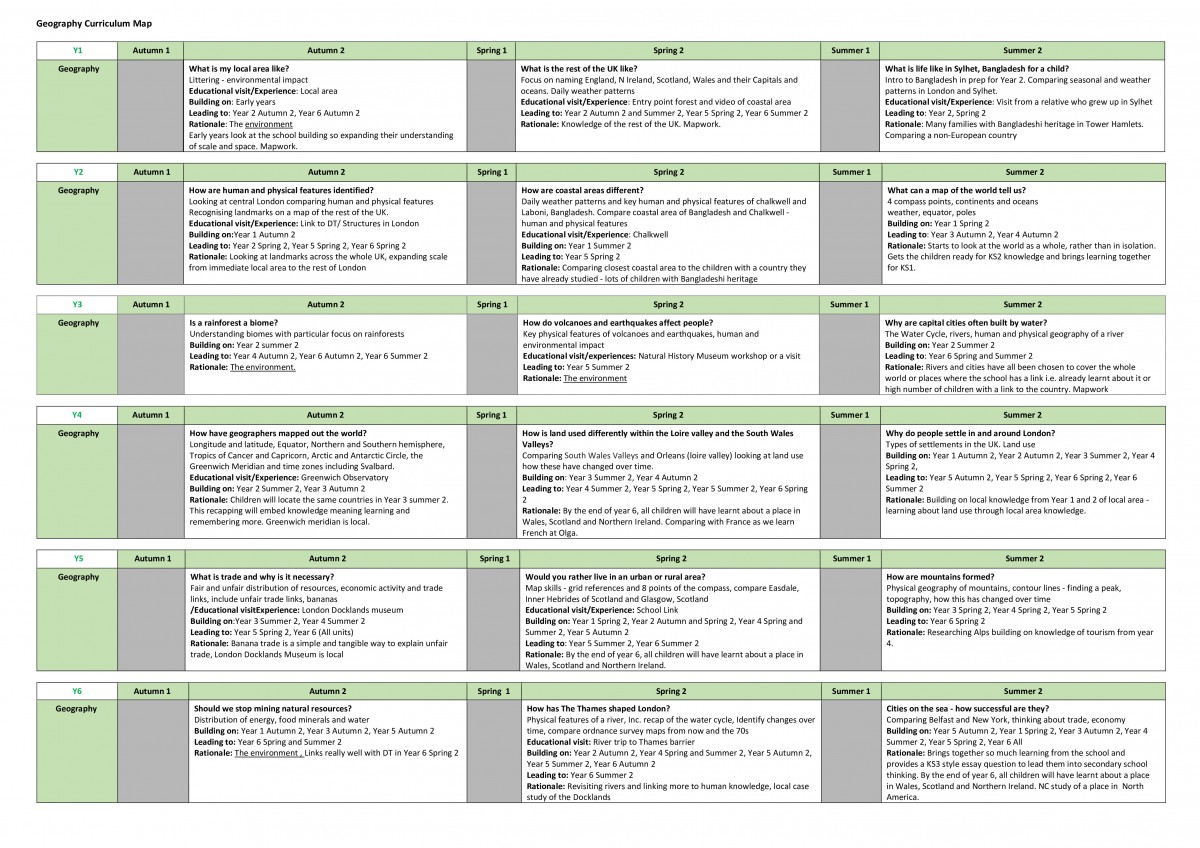
At Olga Primary School, we follow the National Curriculum for Geography, enhanced by a bespoke curriculum tailored to the local context and the backgrounds of our children. This ensures lessons are both meaningful and engaging, while broadening pupils’ horizons by exploring areas of the world they may not yet know.
Each year group explores three Geography units per academic year, with lessons delivered for one hour per week across three half terms. This structure promotes consistent, in-depth learning and helps pupils make meaningful connections across topics.
We bring Geography to life through enriched learning experiences, including educational visits and fieldwork. Each class participates in multiple visits a year, many directly linked to the Geography curriculum. Living in London offers exceptional opportunities to explore diverse environments—from local parks and waterways to the city’s unique urban landscape—providing real-world contexts that support and extend classroom learning.
We are committed to demonstrating clear progression across the school. Knowledge and skills are carefully sequenced to build year on year, supporting pupil development from Early Years through Key Stage 2. Each new unit and lesson begins with a recap of previous learning, linking new concepts to existing knowledge and helping pupils build a secure and connected understanding over time.
Through this thoughtfully structured and responsive curriculum, pupils at Olga develop confident geographical skills, deepen their understanding of the relationships between people and places, and grow as kind, curious, and courageous learners prepared to engage as thoughtful citizens at local, national, and global levels.